
Wheelchair and accessible seating at European stadiums
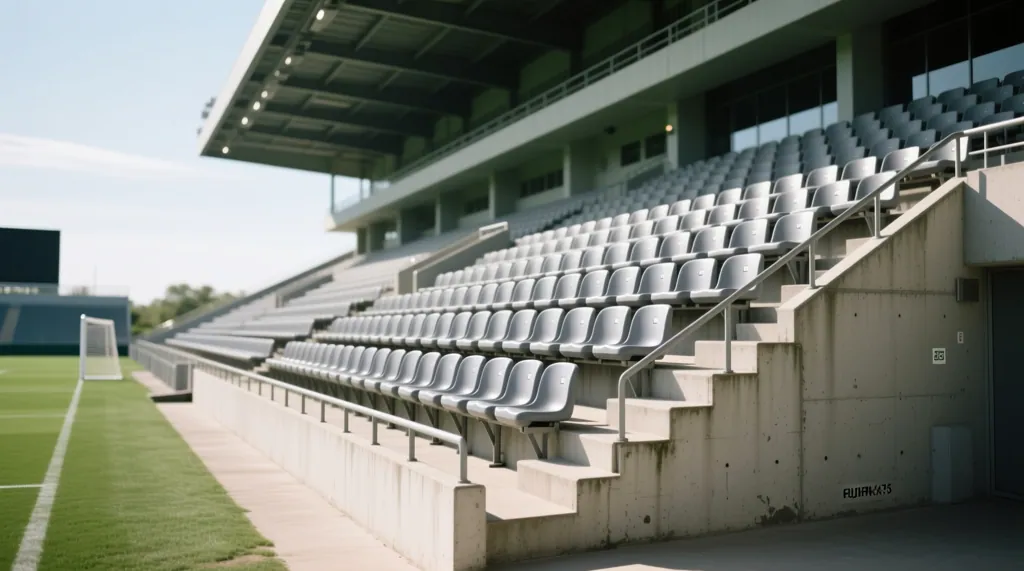
Every major ground in this guide is required to provide accessible seating, but the detail — where the places are, how tickets are allocated and whether a companion seat is included — varies enough that a phone call or an email before booking is always worthwhile. What follows is the pattern across European grounds rather than a promise about any single one.
Where accessible places usually sit
Accessible positions at European grounds are concentrated on the side stands rather than behind the goals, because the side is easier to reach without stairs and offers a better view along the pitch.
Most grounds provide two kinds: elevated platform positions at the back of the lower tier, which give a clear sightline over the crowd in front, and pitch-side positions at the front of a stand.
The elevated position is usually the better choice for a full view, while the pitch-side position is closer to the action but lower and more exposed to the weather.
Tickets, companions and allocation
Accessible tickets are normally sold through the club directly rather than through the general ticket site, and they are frequently limited in number even when the rest of the ground is not full.
A companion ticket is common and is usually offered free or at a reduced rate, but it must be requested at the time of booking rather than added on the day. The companion is normally required to be a carer rather than simply another supporter.
Because the allocation is small, accessible places are often the first to sell out for big fixtures. Booking as early as the ticketing window allows is more important here than in any other part of the ground.
The matchday essentials
- Contact the club's accessibility staff before buying anything.
- Ask whether the accessible position is elevated or pitch-side.
- Request the companion ticket at the time of booking.
- Confirm the designated accessible entrance gate.
- Plan the route around step-free stations, not the shortest one.
- For an away trip, contact the visiting club about the away allocation.
Getting there with step-free access
The journey is often harder than the ground. Older metro stations in several of the cities in this guide have stairs and no lift, while newer lines are fully step-free, so the route that works is not always the shortest one.
The practical approach is to identify the step-free station first and the ground second, then plan a route between them. Clubs and local transport operators publish accessibility information for their own stations, and the club's disability liaison staff can confirm the best route.
At the ground, ask which gate is designated for accessible entry. It is rarely the main gate, and arriving at the wrong one adds a long walk.
Inside the ground on matchday
Accessible entrances open at the same time as the general turnstiles, and arriving early removes almost all of the difficulty. Crowds at a big ground are the main practical obstacle, not the architecture.
Accessible toilets are provided at every major ground, and refreshment counters with lowered serving points are increasingly standard. Their exact locations are worth confirming before the day rather than searching during the match.
Stewards at the accessible entrance are normally the best-informed staff in the stadium, and they are the people to ask about anything from a quieter route out to the location of a lift.
| Question | Why it matters |
|---|---|
| Are the accessible places elevated or pitch-side? | The two give very different views and weather exposure. |
| Is a companion ticket included, and how is it booked? | It must be requested at the time of booking. |
| Which gate is the accessible entrance? | It is rarely the main gate. |
| Is the away allocation accessible? | Visiting clubs allocate their own accessible places. |
| Which is the nearest step-free station? | Older networks are often not step-free. |
| Where are the accessible toilets and counters? | Worth knowing before rather than during the match. |
Away trips need more planning than home ones
An accessible away trip multiplies the variables: an unfamiliar city, an unfamiliar network and a visiting club that controls the ticket rather than the host.
The visiting club's disability liaison contact is the first call, because the away allocation includes accessible places and the visiting club allocates them. The host club's information is useful for the ground itself but not for the ticket.
Allow more time than you would at home, and confirm the away entrance for accessible supporters in advance, because it is frequently separate from the standard away turnstiles.
Planning an accessible matchday, step by step
Start with the club's accessibility contact, confirm the type and location of the accessible places, and ask explicitly about companion tickets and the designated entrance.
Then plan the transport around step-free stations, not around the shortest route. Finally, arrive early, and treat the exit with the same care as the entry — leaving a full ground in a wheelchair takes longer than the walk out.
Accessible seating at European grounds is well provided but unevenly documented. Ask the club directly, confirm the entrance and the companion ticket, and plan the transport around step-free stations — the rest of the day follows the same pattern as any other matchday.