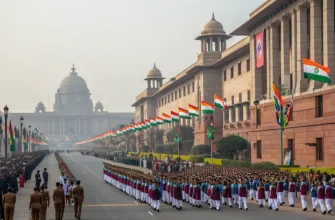
The Student Police Cadet program in India has grown far beyond the idea of a school discipline activity. It now stands as one of the country’s largest youth civic-development initiatives, with more than 12,000 participating schools and over 910,000 enrolled cadets in 2026, according to the latest SPC implementation update published on the program’s own site.
That scale matters because SPC was never designed as a parade-only program. Its stated purpose is to help school students grow into disciplined, law-aware, socially responsible young citizens through a structured mix of training, community work, school participation and interaction with police and teachers. The official SPC overview describes it as a school-based youth development initiative built around respect for law, civic sense, empathy, discipline and resistance to social evils.
What makes SPC especially important in 2026 is that it sits at the meeting point of three pressures modern India feels very strongly: the need for youth leadership, the need for safer communities, and the need for stronger trust between institutions and ordinary citizens. The program’s growth suggests that schools and state agencies increasingly see it not as a symbolic uniformed activity, but as a practical way to shape habits early.
Why the program kept expanding
Large programs do not keep growing for years unless they solve a real problem. In the case of SPC, the attraction is fairly easy to understand. Schools want students who are more confident, more cooperative and more responsible. Police departments want stronger ties with local communities. Parents want teenagers to develop discipline without being pushed into fear-based authority. SPC offers a structure where all three interests can meet. The official overview says the model uses the existing leadership and institutional presence of police to support the physical, mental and social development of young people while helping schools create safer environments.
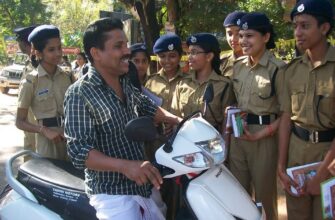
The program also benefits from being broader than many outsiders assume. It is not limited to drills or ceremonial identity. Community projects are built into the training design itself. According to the SPC community-projects section, cadets are expected to work with authorities, develop social responsibility, understand local conditions and practice civic sense and empathy through supervised activities tied to real community needs.
That broader design explains why SPC has lasted. A youth program based only on symbolism would struggle to remain relevant across so many schools. A program that combines structure, visibility and real-world involvement has a much stronger chance of becoming part of school culture.
How training is organized in schools
The official SPC program framework describes the model as a two-year structure beginning from Class 8, with cadets moving through staged training and receiving recognition as they progress. The curriculum is not presented as a narrow police simulation. It blends physical activity, discipline, civic education, social awareness and community-oriented work.
That balance is one reason the program fits schools more naturally than a purely enforcement-style model would. Students are not being prepared to become police officers in school. They are being trained to understand responsibility, public behavior, teamwork and social participation in a more practical way than most classroom lectures can offer. This distinction matters. It changes the meaning of the uniform from costume to role, and the meaning of activity from performance to habit-building.
Before looking at the broader outcomes, it helps to see what the program usually tries to build inside the student.
The core goals most clearly associated with SPC are these:
- respect for law and public order;
- discipline in daily conduct;
- civic sense and social responsibility;
- empathy for vulnerable groups;
- confidence to respond against harmful social behavior.
These goals show why the program appeals to schools. None of them are abstract in the life of a teenager. They affect behavior in classrooms, at home, in public places and online. The value of SPC is that it gives those ideas a visible and repeatable format instead of leaving them as slogans.
What the numbers say about SPC in 2026
The 2026 figures are important not only because they are large, but because they show the program has moved from pilot-stage thinking to mass implementation. The official SPC news update says India now has over 910,000 cadets across more than 12,000 schools. The Kerala-focused current-status page separately notes that within Kerala alone the program is active in 1,000 schools, serves more than 85,000 students currently in training and works with more than 2,000 trained teachers and about 2,000 police officers, with another 3,000 schools waiting for participation.
These figures help explain why SPC is no longer just a state-level success story discussed mainly in Kerala. It has become a national-scale model that other regions can adapt, and that scale changes the conversation. Once a program reaches this level, questions shift from “Does it work at all?” to “How well is it being implemented, and what kind of long-term impact can it have?” That is a more serious and more useful discussion.
A quick look at the present picture makes the scale easier to grasp.
| Indicator | Latest visible SPC figure |
|---|---|
| Participating schools in India | 12,000+ |
| Enrolled cadets in India | 910,000+ |
| Active SPC schools in Kerala | 1,000 |
| Students currently benefiting in Kerala | 85,000+ |
| Trained teachers in Kerala pool | 2,000+ |
| Police officers in Kerala training pool | about 2,000 |
| Schools on waiting list in Kerala | 3,000 |
These numbers do not prove perfection, but they do prove institutional momentum. A program with this many schools, cadets, teachers and police personnel behind it has clearly moved into a different category of public importance. It is now large enough that its quality, reach and continuity matter well beyond the schools where it began.
Why community projects matter more than drills
Many people first notice SPC through uniforms, marches or public events. Those are visible and easy to remember. But the deeper value of the program seems to lie in its community work. The official projects section makes this very clear by describing community projects as a core part of the training process, not an optional extra. Cadets are meant to engage with local authorities, gain insight into social conditions and learn how public responsibility works outside textbooks.
This matters because public-minded behavior is difficult to teach in a purely theoretical way. A student can memorize civic definitions and still remain detached from actual community life. But when cadets are given structured responsibility, even on a small scale, the program becomes concrete. They stop seeing public institutions as distant and start understanding how schools, neighborhoods and authorities connect in daily life. That is where SPC becomes more than a branded youth initiative.
The practical outcomes the program seems designed to encourage include the following:
- stronger school-community links;
- better understanding of public institutions;
- more confidence in dealing with local issues;
- early habits of service and cooperation;
- a stronger sense that citizenship involves action, not only opinion.
That is also why SPC has stayed relevant in public discussion. A program built only around drills can look impressive for a day and forgotten the next week. A program tied to lived community experience leaves a deeper mark on the students who pass through it.
How SPC changes the image of policing for young people
One of the most interesting aspects of SPC is that it changes who the police are in the eyes of school students. In many societies, children and teenagers mostly encounter police through distance, fear, news about crime, or occasional authority at public events. That is a narrow relationship. SPC creates a different one. It introduces police as structured participants in youth development, discipline and community partnership.
That does not automatically remove every criticism or every tension that can exist between institutions and citizens. But it does create a more human starting point. When students interact with police through training, school engagement and supervised projects, they encounter the institution in a formative, everyday setting rather than only at moments of crisis. This is one reason such programs can have long-term value beyond immediate school outcomes. They can influence trust, expectations and public culture over time.
A recent report from Haryana on participatory policing also showed a related state-level student police cadet model being used to educate students about police functioning, law and order, road safety, cybercrime awareness, drug abuse risks and civic responsibility. That suggests the broader logic behind youth-police partnership programs is spreading in ways that fit current social concerns.
Where the real challenges begin
Growth alone is not enough. Once a program becomes this large, consistency becomes the hardest problem. A model that works beautifully in one district can become shallow in another if teachers are underprepared, local coordination is weak or activities turn ritualistic. This is where the next stage of SPC will be decided. Not by raw enrolment numbers alone, but by whether the program remains meaningful inside schools. That inference follows from the scale shown in the official data and from the fact that thousands more schools are waiting to join in Kerala alone.
Another challenge is balance. SPC gains legitimacy because it presents itself as youth development, civic learning and community partnership. If any local implementation becomes too performative, too symbolic, or too narrowly disciplinary, it risks weakening the very strengths that made the model attractive. The official documents emphasize empathy, social responsibility and community insight as much as discipline. Keeping those elements balanced will matter as the network expands.
There is also the question of continuity after school. Large youth programs often create powerful experiences during participation but struggle to maintain long-term pathways for alumni. The fact that SPC and related initiatives have begun holding alumni-oriented events in Kerala suggests that this question is already being taken seriously.
Why SPC now matters beyond Kerala
Kerala remains the best-known foundation of the project, and its official status pages still provide the clearest program architecture and implementation detail. But the 2026 national figures show that SPC is no longer only a Kerala story. It has become a wider Indian youth-development and civic-partnership story. That shift is significant because it means the program now belongs to a much larger conversation about schools, citizenship and public institutions in India.
The strongest sign of maturity is that SPC is no longer defined only by its origin. It is now being discussed through scale, structure, outcomes and future potential. That is what happens when a program moves from local innovation to national model. It also explains why the topic now belongs naturally on a news and public-affairs site focused on the Student Police Cadet identity, field work and community projects.
SPC in India in 2026 is not just a story about more students joining a program. It is a story about how a school-based model of discipline, service and civic learning has reached a size where it can shape public habits on a much wider scale. More than 910,000 cadets is a headline number. The more important question is what kind of citizens those cadets become after the uniform comes off.